Southern Norway Itinerary (2 Weeks): Tips for Your Road Trip
Southern Norway is known for its breathtaking fjords, stunning natural landscapes, and vibrant cities like Bergen and Oslo. With this two-week Southern Norway itinerary, you’ll discover all the highlights of the region. In addition, we share practical tips to help your road trip run smoothly and make sure you get the most out of everything this beautiful part of Norway has to offer.
For this route, take the ferry from Hirtshals in Denmark to Kristiansand and end your journey in Oslo, with the option to take the ferry back to Kiel. Of course, you can also drive the route in reverse or include the stretch between Oslo and Kristiansand.
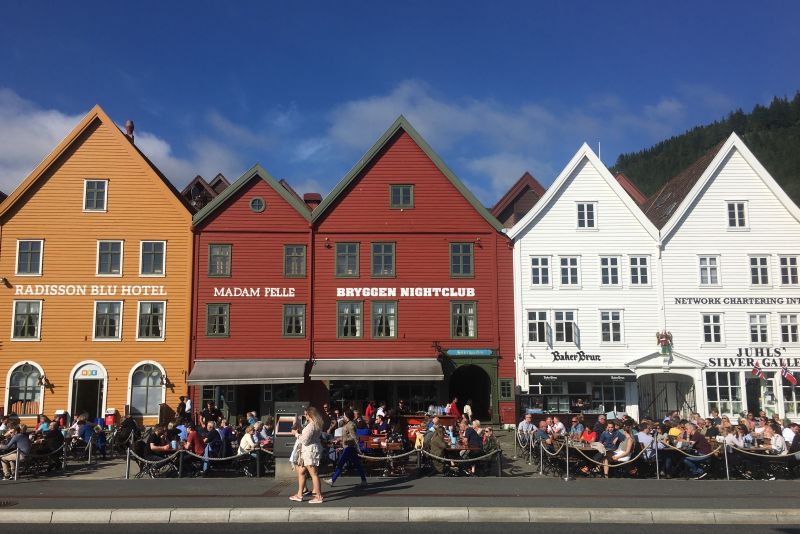
Days 1–2: Road Trip Along the Southern Coast from Kristiansand to Stavanger
From Kristiansand, follow the southern coast of Norway all the way to Stavanger. Along the way, you’ll pass charming coastal towns, scenic viewpoints, sandy beaches, and small islands scattered across the sea. These are some of the best stops to make along the route:
Mandal
The southernmost town in Norway is known for its wide sandy beach, Sjøsanden, and its charming town center filled with white wooden houses. From Kristiansand, it’s about a 45-minute drive to Mandal. For us, this was the perfect first overnight stop after the ferry crossing. A good opportunity to rest up before hitting the road the next morning.
Lindesnes Fyr
At Lindesnes, you’ll find the oldest and southernmost lighthouse of Norway. Built in 1656, it’s still manned today. From the rugged rocks surrounding the lighthouse, you can enjoy sweeping views over the North Sea. The visitor center provides fascinating insights into the lighthouse’s history and its importance over the centuries.
Sogndalstrand
Sogndalstrand is a historic fishing village with colourful wooden buildings dating back to the 18th and 19th centuries. A salmon river runs through the village, making it a favorite among anglers, while local art galleries and workshops add a creative vibe. Stay at the Sogndalstrand Kulturhotell, where you’ll sleep in beautifully restored wooden houses right by the water.
Stavanger
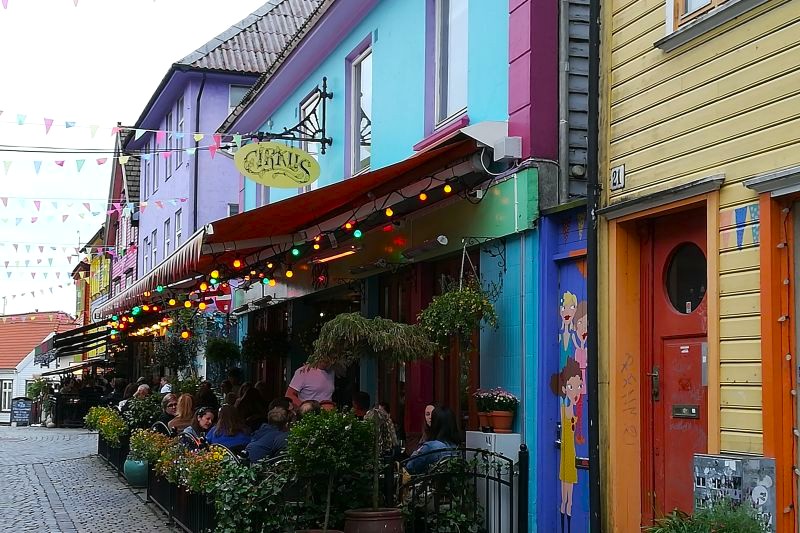
Stavanger is not only the center of Norway’s oil industry but also a lively and surprisingly cozy city. Explore the old town (Gamle Stavanger) and the Norwegian Petroleum Museum. End your day with a delicious dinner in the old harbor.
Excursion: Not far from Stavanger lies the famous Preikestolen (Pulpit Rock). The hike to this popular viewpoint takes about four hours round trip and rewards you with a spectacular view over the Lysefjord. It’s best to start early in the morning if you want to avoid the crowds.
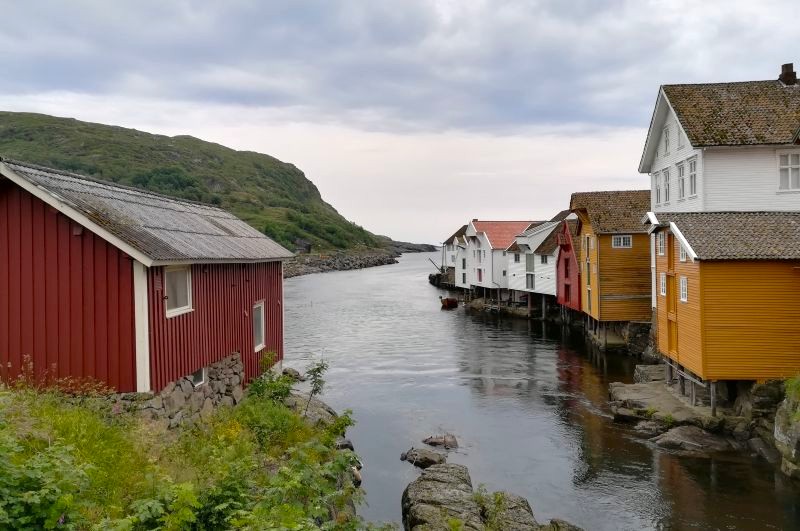
Days 3–4: Waterfalls and Fruit Farms along the Hardangerfjord
From Stavanger, head north towards the Hardangerfjord, a region famous for its spectacular waterfalls, charming villages, and vast fruit orchards. These are the highlights:
Låtefossen
On the way to Odda, you’ll pass Låtefossen, a twin waterfall dropping 165 meters down from the mountains with impressive force. The waterfall lies right along Route 13, and there’s a small parking area where you can stop. It’s definitely worth taking a short break to admire this natural spectacle up close.
Ulvik
Continue your journey towards the Hardangerfjord to reach Ulvik, a picturesque village beautifully situated by the water and the perfect base for exploring the region. Follow the Fruit and Cider Route, which takes you past local farms such as Syse Gard, where you can sample homemade cider. There’s also a café and a small shop selling fruit, juice, cider, and other regional products. Moreover, Ulvik is a true hiker’s paradise, with scenic trails that wind along the fjord and into the surrounding mountains.
Steindalsfossen
Following the National Tourist Route Hardanger towards Bergen, you’ll come across Steindalsfossen, a remarkable waterfall you can actually walk behind without getting wet. A short path leads you to the back of the falling water, offering a unique perspective on the 50-meter-high cascade.
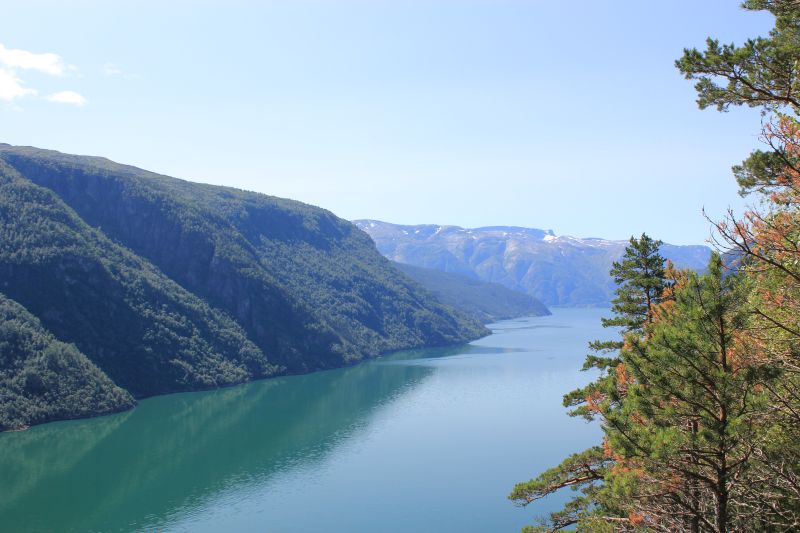
Days 5–6: Bergen, the Capital of the Fjords
After the natural splendour of the Hardangerfjord, it’s time to discover Norway’s second-largest city. But don’t worry, even here, nature is never far away. Bergen, often called the capital of the fjords, combines a rich history with a lively harbour and charming wooden houses. Surrounded by seven mountains, the city offers the perfect blend of urban life and nature.
Bryggen
The historic harbor district of Bryggen is the iconic heart of Bergen and is also a UNESCO World Heritage Site. The colourful Hanseatic houses take you back in time. Wander through the narrow alleyways lined with old warehouses, now home to creative shops, galleries, studios, and cozy cafés and restaurants.
Fisketorget
Just a short walk from Bryggen is the Fish Market. Here you can taste fresh salmon and seafood or pick up local products and souvenirs. It’s one of the city’s main tourist attractions, which is reflected in the higher prices. The covered market at Mathallen is open year-round, while the outdoor market operates only in the high season (early May to late September).
Fløyen & the Fløibanen Funicular
The Fløibanen funicular takes you to the top of Mount Fløyen in just a few minutes. For those who prefer to be active, it’s also possible to hike to the top. A forest trail from the city center takes about an hour. On the summit, you’re rewarded with panoramic views over the city, the fjords, and the surrounding mountains. Fløyen is the starting point for several hiking trails, and you’ll also discover a troll forest, a restaurant, and some lovely picnic spots.
Museums & Culture
Art lovers will enjoy Bergens Kunsthall and KODE, a collection of art museums that includes works by the famous Norwegian painter Edvard Munch. In addition, Bergenshus Fortress, one of Norway’s oldest fortresses, is also worth a visit.
Accommodation Tip: For a stay in the heart of Bergen, Hotel Oleana is an excellent choice. This colourful boutique hotel is within walking distance of the main attractions. Some rooms are on the smaller side, but the beds are comfortable, and the breakfast buffet is extensive and well-prepared.
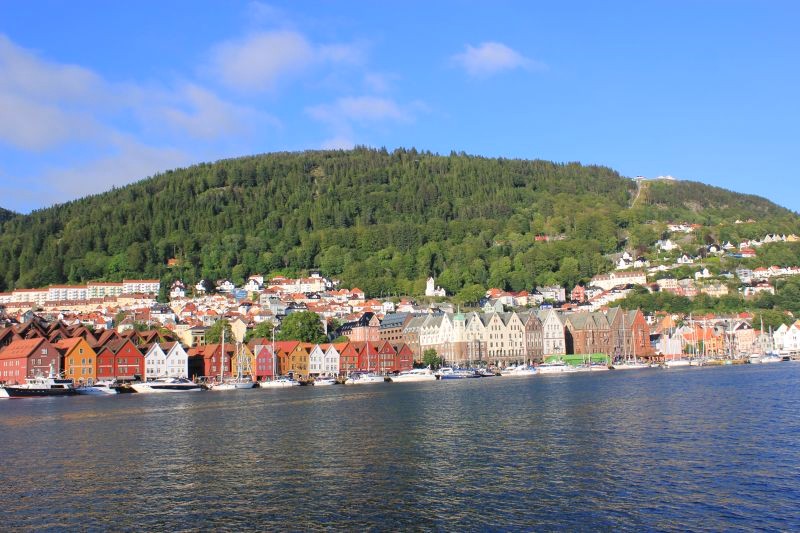
Days 7–8: The Sognefjord Region
The Sognefjord is Norway’s longest and deepest fjord, with several stunning side arms. Visiting this region is one of the highlights of your Southern Norway itinerary. Explore the most beautiful fjords, glaciers, and viewpoints on a road trip through a truly enchanting landscape.
Nærøyfjord
The Nærøyfjord is a 17-kilometer-long branch of the Sognefjord. The fjord is exceptionally narrow, flanked by steep mountain walls rising dramatically from the water, making it one of the most spectacular fjords in Norway. You can explore the fjord on a boat trip or fjord cruise between Flåm and Gudvangen.
Aurlandsfjellet
Next, drive along the impressive Aurlandsfjellet, connecting Lærdal with Aurland. The route takes you through breathtaking mountain scenery, with the highlight being the Stegastein viewpoint, a platform soaring 650 meters above the Aurlandsfjord. The Aurlandsfjellet is also known as the “Snow Road” and is only open in the summer; outside this period, you can take the Lærdal Tunnel, the world’s longest road tunnel.
Lustrafjord
From the idyllic village of Solvorn, take the ferry to Urnes on the eastern shore of the Lustrafjord to visit Norway’s oldest stave church. This wooden church dates back to the 12th century and is a UNESCO World Heritage Site. Further along the fjord, you’ll find the impressive Feigefossen, a waterfall with a free fall of 218 meters.
Excursion: This region is also home to Jostedalsbreen National Park, which contains several impressive glaciers. You can take a guided walk on the Nigardsbreen Glacier or visit the Glacier Museum in Fjærland.
Days 9–10: Nordfjord & Geirangerfjord
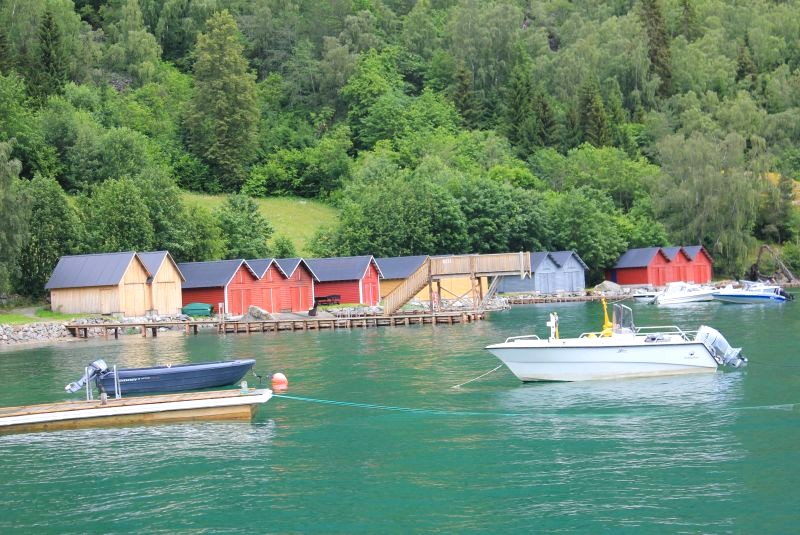
Continue north towards the Nordfjord and the famous Geirangerfjord. Along the way, you’ll drive through a varied landscape of deep fjords, crystal-clear lakes, and steep mountains. Without a doubt one of the most beautiful stretches of your Southern Norway itinerary.
Lovatnet
Near Loen, at the end of the Nordfjord, lies Lovatnet, an incredibly beautiful lake surrounded by snow-capped mountains and waterfalls. Due to glacial deposits, where meltwater carries tiny stones and clay that reflect sunlight, the water has a striking pearly green colour. Along the lake, you’ll find several viewpoints and picnic spots. Sadly, Lovatnet also has a tragic history: in 1905 and 1936, landslides caused massive waves that wiped out several villages along the lake forever.
Geirangerfjord
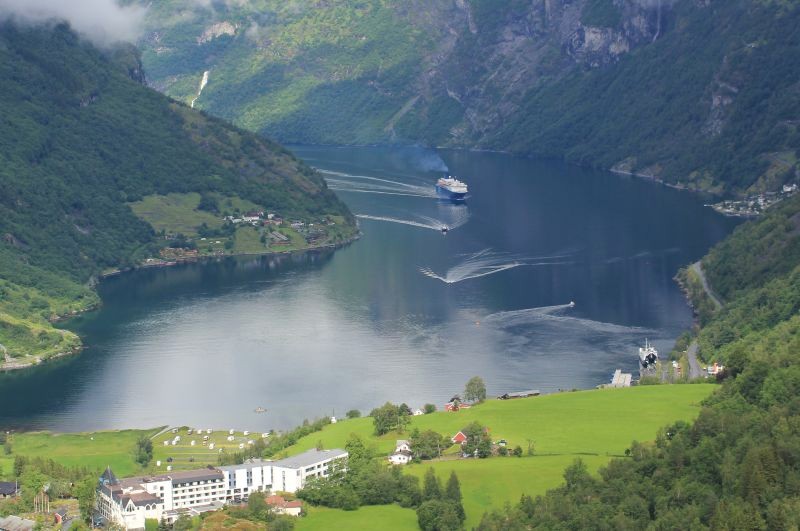
The Geirangerfjord is one of Norway’s most iconic fjords. Take a fjord cruise or a kayaking trip to admire spectacular waterfalls such as The Seven Sisters and The Bridal Veil from the water. Along the steep mountainsides, abandoned farms cling to the rocks, silent witnesses of the past. Afterwards, drive into the mountains for a breathtaking panorama over the fjord and surrounding peaks.
Accommodation Tip: A fantastic base for exploring this region is Overvoll Farm. Stay in a traditional Norwegian farmhouse and enjoy a hearty breakfast or dinner prepared by the hostess using local and organic ingredients. The farm is just a 15-minute drive from Hellesylt, where you can board a cruise on the Geirangerfjord.
Day 11: Lom & Lillehammer
After the impressive fjord landscapes, the journey continues inland. Along winding mountain roads, you’ll reach Lom, a picturesque mountain village on the edge of Jotunheimen National Park. From there, continue on to Lillehammer, best known as a winter sports destination.
Lom
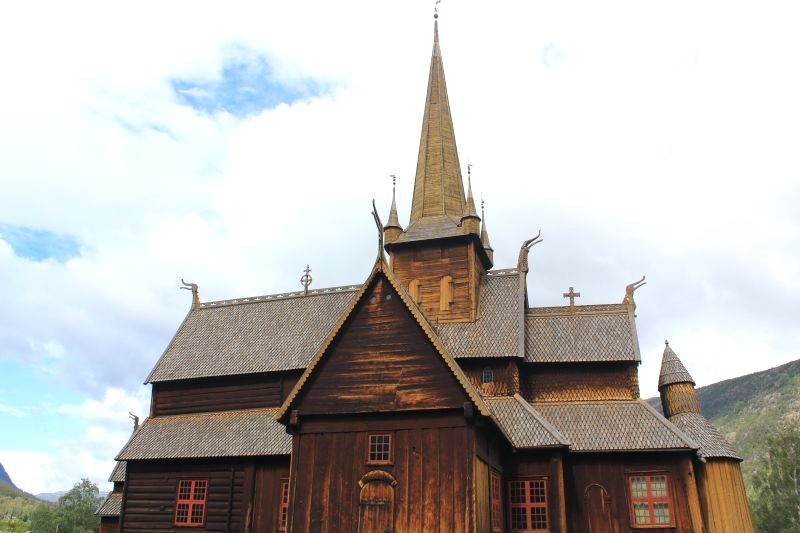
In the mountain village of Lom, you’ll find one of Norway’s largest and most beautiful stave churches. The church dates back to the 12th century but was rebuilt and expanded in the 17th century. Inside, you can see a large collection of paintings by Eggert Munch, a distant relative of the famous artist Edvard Munch. In summer, the church is open daily.
Lillehammer
Lillehammer has a rich winter sports tradition. The Olympic Park, built for the 1994 Winter Olympics, can still be visited today. One of the highlights is the Lysgårdsbakken ski jump, which you can climb for an unforgettable view over the city and Lake Mjøsa.
Days 12–14: The Versatile Capital Oslo
To conclude your Southern Norway itinerary, you’ll explore Oslo, a vibrant, multicultural city with plenty to offer: from modern architecture and museums to lively neighborhoods and beautiful natural surroundings. Here are some must-see highlights:
Opera House
The Oslo Opera House is an architectural masterpiece, inspired by Norwegian nature. The building is finished with granite and marble and seems to rise from the Oslofjord like an iceberg. Visitors can climb the roof, which offers panoramic views over Oslo’s skyline and the harbor.
Vigeland Park
In Vigeland Park, you’ll discover over 200 sculptures by the Norwegian artist Gustav Vigeland. The bronze, cast-iron, and granite figures depict the human life cycle and a wide range of emotions. Around one million visitors come to the park each year, making it one of Norway’s most popular attractions. The park is free to enter year-round, perfect for a relaxing stroll in any season.
Museums
Oslo is home to numerous world-class museums, such as the Munch Museum or the Nobel Peace Center. On the Bygdøy peninsula, you’ll find the Norwegian Folk Museum, the Viking Ship Museum and the Fram Museum, where you can learn all about Norway’s exploration history and maritime heritage.
Grünerløkka
Grünerløkka is Oslo’s hippest neighborhood. Street art pops up everywhere, and old factories have been transformed into cafés and galleries. Vulkan is the heart of the area, a sustainable urban development project featuring the Mathallen food hall as one of its main attractions. Be sure to take a walk along the Akerselva River, which runs through the neighborhood. Along the way, you’ll encounter both waterfalls and remnants of the city’s industrial past, making the stroll even more interesting.
Tip: With the Oslo Pass you get free access to a large number of museums and attractions. In addition, you can enjoy free public transport and special offers at shops, restaurants, and various activities.

Southern Norway Itinerary: Practical Tips
This route takes you to some of the most beautiful spots in Southern Norway. Read through a few frequently asked questions below to make sure you’re well prepared for your trip.
How Many Kilometers Do You Drive per Day on Average in Norway?
Keep in mind that completing this itinerary in two weeks means spending a fair amount of time in the car. If you wish, you can shorten the route or add extra days. The distances between overnight stops are generally no longer than 300 kilometers, which is more than enough, as you’ll frequently want to stop along Norway’s scenic roads to take photos and enjoy the landscape.
Also, be aware of maximum speed limits in Norway:
- 50 km/h (31 mph) in built-up areas
- 80 km/h (50 mph) outside built-up areas
- 90-100 km/h (56–62 mph) on highways (for example, between Lillehammer and Oslo)
Do You Have to Pay Tolls in Norway?
Yes, Norway has several toll roads, especially around major cities. Your license plate is automatically registered with cameras. It’s recommended to create an Epass24-account in advance, which makes managing payments easy and gives you an overview of your trips. If you drive frequently in Norway, you can also get a toll tag, which often gives you a discount.
Is Parking Easy in Norway?
This Southern Norway itinerary also takes you through some busy cities, such as Bergen and Oslo. Parking in these cities can be expensive. It’s often better to park your car outside the city center and use public transport. Use parking garages or parking apps to find a spot more easily. Some hotels also offer parking, usually for an additional fee.
What Is the Best Time to Visit Norway?
The summer months (June to August) are ideal for good weather and long days. May and September are quieter, but some mountain passes may be closed, and ferry services could be limited.
Should You Book Accommodations in Advance?
Yes, especially during the high season it’s wise to book your accommodation in advance. Popular places like Geiranger fill up quickly. Outside of the high season, it’s usually easier to find a place spontaneously, but booking ahead gives you peace of mind and prevents stress during your road trip. Norway is also perfect for a camper trip, but keep in mind that narrow roads can be challenging with a large camper.
This article contains some affiliate links. This means we receive a small commission if you book or purchase through our recommendations. It doesn’t cost you anything extra, but it does help support this blog. Thank you for helping Into the North continue to grow!
 EN
EN  NL
NL